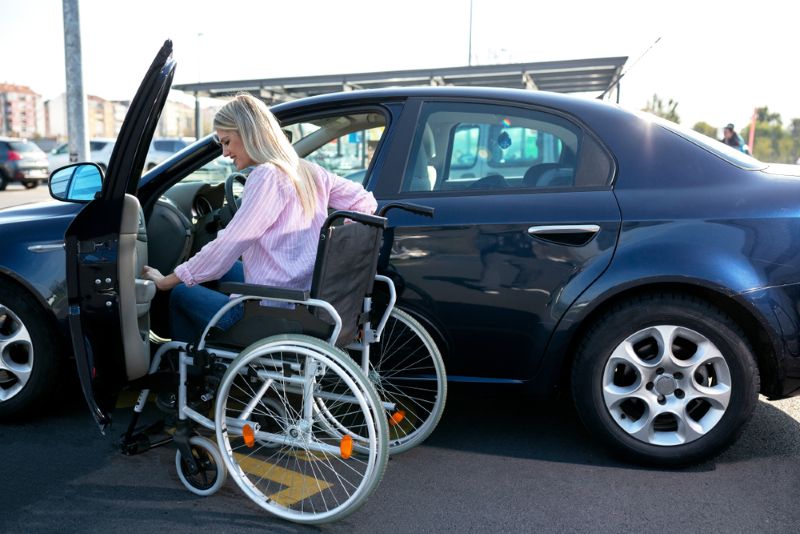
Winter weather creates significant challenges for businesses responsible for maintaining parking lots, sidewalks, and building entrances. Snow accumulation, freezing rain, and icy conditions can make commercial properties difficult to access, particularly for individuals with disabilities who rely on accessible parking spaces, wheelchair ramps, and designated pedestrian routes.
Under the Americans with Disabilities Act (ADA), businesses must ensure that required accessible features remain usable. This responsibility extends to winter maintenance, when snow piles, ice accumulation, and improper plowing practices can obstruct areas designed for people with disabilities.
For businesses in Erie, Pennsylvania, and other regions experiencing substantial winter snowfall, proactive snow and ice management is particularly important. Understanding how to maintain accessible parking spaces and pedestrian routes can help property owners protect visitors, reduce liability risks, and maintain accessibility throughout the winter.
Why Is ADA Accessibility Important During Winter?
The ADA establishes accessibility requirements for many businesses and public facilities. These standards address features such as accessible parking spaces, access aisles, curb ramps, sidewalks, and building entrances.
However, providing these features is only part of maintaining an accessible property. Businesses must also take appropriate steps to ensure required accessible features remain usable.
Winter weather can create several accessibility problems, including:
- Snow accumulation that blocks designated accessible parking spaces.
- Ice covering access aisles where individuals enter and exit vehicles.
- Snowbanks obstructing curb ramps and wheelchair-accessible entrances.
- Slippery sidewalks that make mobility devices difficult to operate.
- Plowed snow blocking pedestrian connections between parking areas and buildings.
For individuals using wheelchairs, walkers, or other mobility aids, even relatively small amounts of accumulated snow can create substantial obstacles.
Businesses should incorporate accessibility considerations into their overall winter maintenance procedures rather than treating them as secondary concerns.
How Should Businesses Maintain Accessible Parking Spaces?
Accessible parking spaces require special attention during snow removal operations. These spaces are generally located near accessible building entrances and include designated access aisles that provide room for individuals to enter and exit vehicles.
The ADA establishes specific requirements for accessible parking dimensions, surfaces, and access aisles. Snow removal operations should preserve these features rather than temporarily obstructing them.
Property owners and snow removal contractors should follow several important practices.
Clear Parking Spaces and Access Aisles Completely
Removing snow from the parking space itself is not sufficient if the adjacent access aisle remains obstructed.
Access aisles provide essential space for wheelchair lifts, mobility devices, and vehicle transfers. Snowbanks or accumulated ice in these areas can make an otherwise accessible parking space unusable.
Avoid Using Accessible Spaces for Snow Storage
Snowplow operators sometimes push snow into unused parking spaces to create additional room elsewhere in a parking lot.
However, designated accessible parking spaces and access aisles should never serve as snow storage areas. Businesses should identify appropriate snow accumulation locations before winter storms arrive.
Monitor Ice Formation After Plowing
Even when snow has been removed, melting and refreezing can create dangerous conditions.
Businesses should inspect accessible parking areas regularly and apply appropriate ice-control treatments when conditions warrant.
These measures help preserve accessibility while reducing the likelihood of winter-related accidents.
What Accessible Routes Must Remain Clear During Winter?
Accessible parking spaces must connect to accessible entrances through designated routes. Clearing a parking space provides little benefit if an individual cannot safely reach the building.
Businesses should pay particular attention to the following areas:
- Sidewalks connecting accessible parking spaces to building entrances.
- Curb ramps that provide transitions between parking lots and sidewalks.
- Pedestrian crossings located along accessible routes.
- Ramps and landings near accessible entrances.
- Exterior pathways connecting multiple buildings or facilities.
Snow removal contractors should understand the property's designated accessible routes before beginning work.
For example, pushing snow against a curb ramp may appear harmless during routine parking lot plowing. However, the resulting snowbank can prevent someone using a wheelchair from reaching the sidewalk.
Similarly, clearing only a narrow pedestrian path may not provide sufficient space for individuals using mobility devices.
Businesses should maintain the required clear width of accessible routes and ensure that snow removal equipment does not damage accessibility features.
How Can Businesses Prevent Snow and Ice From Blocking Accessible Areas?
Effective winter accessibility begins with planning before the first snowfall.
A comprehensive snow response plan should identify accessibility priorities, establish maintenance responsibilities, and address conditions that may develop during and after winter storms.
Several strategies can improve winter accessibility.
Establish Snow Removal Priorities
Accessible parking spaces, access aisles, curb ramps, and primary entrances should receive appropriate priority during snow removal operations.
Contractors should know which areas require immediate attention and how accessibility will be maintained during prolonged storms.
Designate Appropriate Snow Storage Locations
Businesses should identify snow storage areas that will not obstruct accessible routes, parking spaces, entrances, or pedestrian visibility.
These locations should also account for drainage patterns to prevent melting snow from flowing across accessible pathways and refreezing.
Use Appropriate Ice Management Techniques
Pretreatment and anti-icing strategies can help limit ice formation before and during winter weather events.
The appropriate materials and application methods depend on pavement conditions, temperatures, precipitation, and other site-specific considerations.
Conduct Regular Property Inspections
Winter conditions can change rapidly, particularly during freeze-thaw cycles.
Routine inspections help identify new hazards, including ice accumulation, drainage problems, and snowbanks that have expanded into accessible areas.
Documenting these inspections and subsequent maintenance activities also provides useful records if questions arise concerning property conditions.
Can Businesses Face Liability for Inaccessible Parking Areas?
Businesses that fail to maintain accessible features may face accessibility complaints, regulatory concerns, or legal disputes, depending on the circumstances.
Snow and ice accumulation can also contribute to slip-and-fall accidents and other injuries involving employees, customers, and visitors.
However, liability is not determined solely by the presence of snow or ice. Factors such as applicable legal requirements, property conditions, maintenance responsibilities, weather patterns, and the reasonableness of the response may all become relevant.
A documented snow response plan can help businesses demonstrate how they prepare for winter conditions and address potential hazards.
Working with experienced snow and ice management consultants can help property owners identify maintenance concerns, establish appropriate procedures, and improve winter operations.
How Can Snow and Ice Consulting Help Businesses Maintain Accessibility?
Professional snow and ice consulting provides businesses with guidance on developing effective winter maintenance strategies.
Rather than relying exclusively on reactive plowing, consultants can evaluate property layouts, identify recurring problem areas, and recommend procedures that support safer winter conditions.
For businesses in Erie and throughout Pennsylvania, these services may include reviewing accessible parking configurations, identifying problematic drainage areas, evaluating snow storage locations, and developing detailed snow response plans.
Consultants can also help property managers establish expectations for snow removal contractors, including service priorities, inspection procedures, and documentation requirements.
By addressing accessibility concerns before winter weather arrives, businesses can improve operational efficiency while reducing preventable hazards.
Contact Allin Rose Consulting for Professional Snow and Ice Management Guidance
Maintaining accessible parking spaces and pedestrian routes throughout winter requires careful planning, consistent monitoring, and effective snow removal procedures. Businesses that prioritize accessibility can better protect visitors while reducing the risks associated with winter property maintenance.
At Allin Rose Consulting, our Erie-based team brings decades of snow and ice management experience to commercial properties, contractors, and facility managers throughout Pennsylvania and nationwide.
If your business needs assistance developing a snow response plan, improving winter accessibility, or evaluating existing snow removal practices, we are here to help. Call us today or connect with us online to schedule a consultation.